

Pan-Seared Duck Breast with Balsamic Glaze
Crisp-skinned duck breasts served with a glossy, sweet-tart balsamic reduction.
Instructions
-
Step 1
Combine the balsamic vinegar, chicken stock, and honey in a small saucepan. Bring to a gentle simmer over medium heat.
-
Step 2
Reduce the mixture over low heat until glossy and thick enough to lightly coat a spoon.
-
Step 3
Remove the saucepan from the heat and whisk in the cold butter until the glaze is smooth. Set aside.
-
Step 4
Pat the duck breasts dry. Score the skin in a shallow crosshatch without cutting into the meat, then season both sides with the salt and black pepper.
-
Step 5
Place the duck breasts skin-side down in a cold, dry heavy skillet. Set the skillet over medium heat and cook until the skin is deeply browned and much of the fat has rendered.
-
Step 6
Turn the breasts and cook over medium heat until the thickest part reaches 74°C.
-
Step 7
Transfer the duck breasts to a clean plate and rest them skin-side up.
-
Step 8
Slice the rested duck breasts across the grain and serve with the warm balsamic glaze spooned over or alongside.
Nutrition (Estimated)
Food safety
Caution: high
Prevent cross-contamination, use clean utensils for cooked duck, and verify that the thickest part of each breast reaches 74°C before serving. Refrigerate leftovers within 2 hours.
Risk factors
- raw poultry can carry harmful bacteria
- duck breasts may cook unevenly because of varying thickness
- rendered duck fat can cause serious burns
Related recipes
-
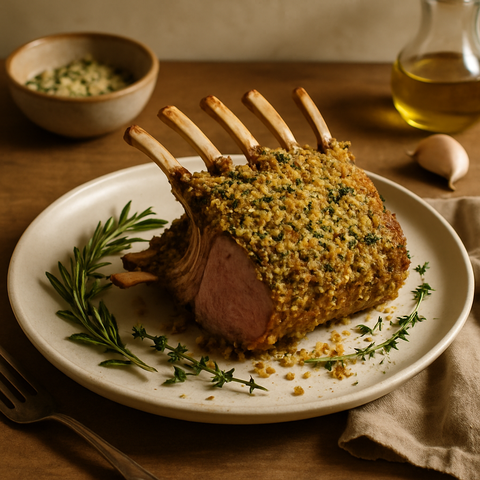 EuropeanFrenchBalancedHalalHigh ProteinKetoLow CarbMediterranean
Herb-Crusted Rack of Lamb
Seared racks of lamb coated with Dijon mustard and a crisp garlic-herb breadcrumb crust, then roasted and carved into chops.
-
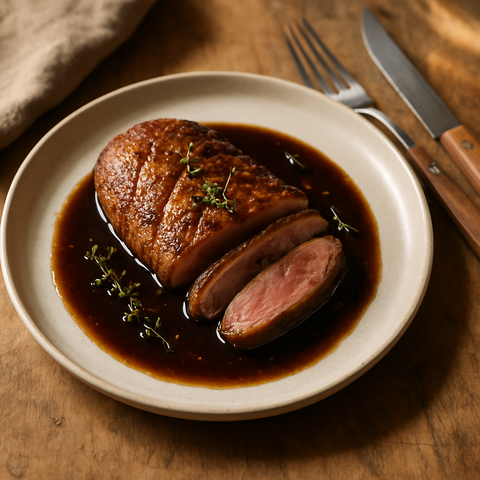 EuropeanFrenchBalancedHalalHigh ProteinLow Carb
Seared Duck Breast with Balsamic Reduction
Crisp-skinned, pan-seared duck breasts served with a glossy balsamic, shallot, and thyme reduction.
-
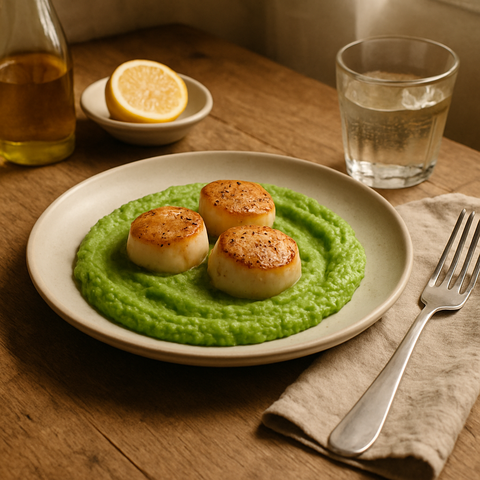 EuropeanFrenchBalancedHalalHigh ProteinLow CarbPescatarian
Seared Scallops with Pea Puree
Golden, tender sea scallops served over a smooth pea puree brightened with lemon and balanced with butter and shallot.


